Your insurance may not cover what AI wrote
New standard wording lets insurers exclude claims "arising out of" generative AI — including the part of a policy that covers your advertising. If AI writes your website, your social posts or your chatbot's answers, it's worth one question to your broker before renewal.
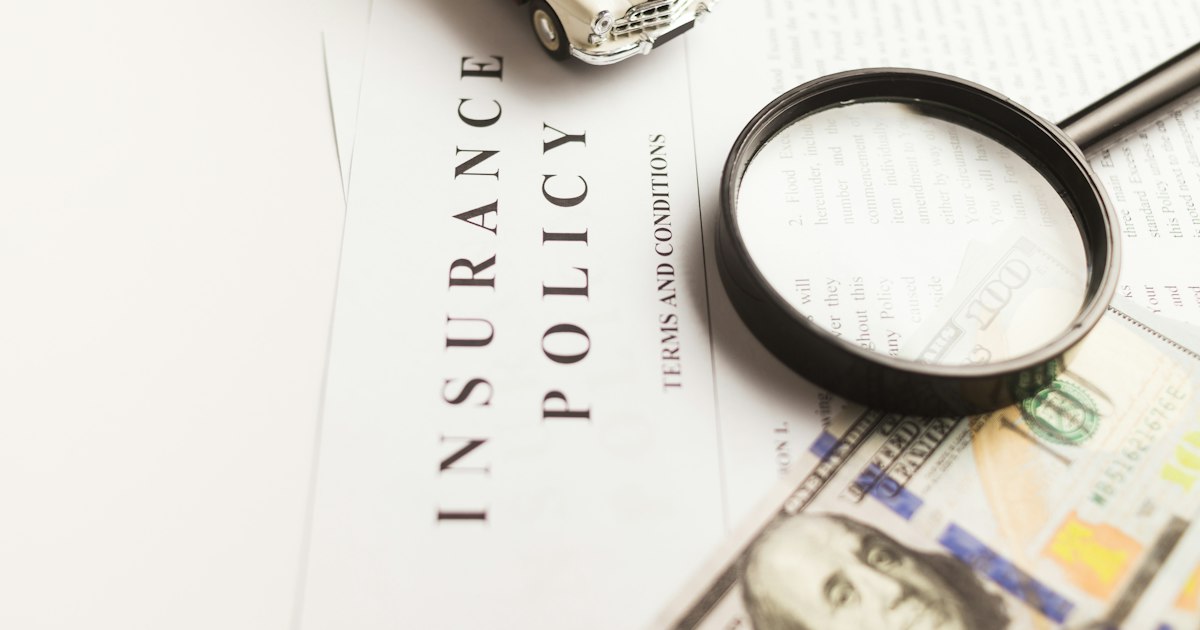
Most small businesses never read their liability policy. It sits in a drawer or an inbox, it renews every year, and the assumption is that it covers the business the way it always has.
This year that assumption got a lot less safe.
What changed in January
In the US, most business liability policies are built on standard wording written by an industry body, so insurers don’t each reinvent the contract. From January 2026, that standard wording gained new optional endorsements aimed at one thing: generative AI.
The broadest of them excludes injury, damage, and “personal and advertising injury arising out of, or attributable to, generative AI.” A narrower version removes only the personal and advertising injury section. A third does the same for products and completed work.
Lawyers who follow this describe the market as moving away from what it calls “silent AI” — the years when policies simply didn’t mention AI, and so arguably covered it. At least one specialist insurer has gone further with what it calls an “absolute” AI exclusion.
Why “advertising injury” is the part to care about
That phrase sounds like something for big brands with ad agencies. It isn’t.
Personal and advertising injury is the bit of a standard liability policy that covers claims about what your business says in public — your marketing. If someone claims your promotional material defamed them, used their image without permission, or copied their work, this is the cover that would usually respond.
And for a small business, “your marketing” means your website. Your service descriptions. Your social posts. The photo on your homepage. Your chatbot’s answers.
Lawyers looking at the new wording list the kind of claims that could now fall outside cover: AI-generated text, images, audio or video that leads to a defamation or privacy claim, and statements made by chatbots and virtual assistants. If AI made it and a claim arises from it, an exclusion like this is written to catch it.
What this doesn’t mean
It is worth being precise, because this is easy to over-dramatise.
- The endorsements are optional. Your insurer may not have added one. Many policies won’t have it yet.
- We are not aware of a published wave of denied claims. The legal commentary so far is about what could happen under the wording, not a run of real refusals.
- Rules differ by country. This wording is American. Elsewhere, insurers may be doing something similar in their own way — or not yet.
So the right response isn’t panic. It’s one specific question, asked before your next renewal instead of after your first claim.
The fair question
devkoi is an AI that writes websites. So yes — if your policy carries an exclusion like this, it may apply to pages written that way, including pages built here. It would be dishonest to write this article and leave that out.
Two things are true about how devkoi works, and both happen to be what the lawyers recommend anyway. You see a preview of every change before it goes anywhere, and publishing is a separate step you take. And every version of your site is kept, so there is a dated record of what was published and when.
Neither of those changes the wording of anybody’s policy. Whether reviewing and approving content makes any difference to cover is a question for your insurer, not for us. But reading what you publish, and being able to show what it said, is the kind of care that matters whoever wrote the first draft.
(General information, not legal or insurance advice. Check your own policy and ask a qualified broker.)
What to do this week
1. Find your liability policy and look for the words “generative artificial intelligence”. It will usually appear in an endorsement — an extra page added to the policy. If your policy is US-based, the standard forms carry the numbers CG 40 47, CG 40 48 and CG 35 08.
2. Ask your broker one question, in writing.
“Does my policy exclude claims arising from generative AI — including content on my website, my social media and any chatbot?”
Keep the answer.
3. List where AI touches what customers see. Website text, product or service descriptions, images, social posts, ads, a chatbot. You can’t ask about cover for something you haven’t noticed you’re using.
4. Read everything before it goes live. Treat AI-written copy as a first draft from someone who has never met your customers. Strip out claims you can’t stand behind — comparisons with named competitors, health or safety promises, anything about another person.
“Remove the comparison with other local garages from the services page.”
5. Use your own photographs. An image you took yourself carries no question about where it came from.
“Swap the stock photos on the homepage for the ones I took of the workshop.”
6. Be careful with chatbots in particular. Chatbot statements are named specifically in the legal commentary. We have argued before on this blog that most small businesses are better served by writing the answers on the page — this is one more reason.
7. If AI is central to how you work, ask about specialist cover. Insurers are starting to offer policies built for AI risk. Your broker will know whether one fits.
For years, nobody’s insurance mentioned AI, so everybody assumed it was covered.
That quiet assumption is ending. The fix is not to stop using the tools. It is to know what your policy says, read what you publish, and keep a record — dull habits that cost an afternoon and could matter a great deal on a bad day.